Bedding guide
Choosing a Waterproof Layer for Organic Crib Bedding
A waterproof layer can help protect a crib mattress from spills, leaks, and everyday moisture. But “waterproof” is only one part of the decision: materials, construction, dimensions, layering, and care all matter. A carefully chosen pad should fit the mattress as intended and be used in a way that remains consistent with current safe-sleep guidance.
A small layer with an important job
In a nursery, a mattress pad is a practical barrier between the mattress and the fitted crib sheet. It can help limit the amount of liquid that reaches the mattress during routine changes, spills, or nighttime accidents. By keeping the mattress cleaner and making some messes easier to manage, the right layer may also simplify day-to-day care.
That usefulness does not make every pad interchangeable. Some are designed chiefly to absorb moisture; others include a waterproof membrane intended to stop liquid from passing through. A soft cotton surface may feel different from a quilted pad, while an elasticized fitted style and a flat rectangular style behave differently when placed on a mattress. The most suitable choice depends on the product’s stated purpose, the mattress dimensions, and the instructions for how it should be used.
Organic materials may be a priority for families choosing organic crib bedding. In that case, it helps to look beyond a product’s name or front-label description. Check which parts are organic, what the waterproof barrier is made from, whether any certification applies to the finished item or only certain materials, and how the pad must be washed. A clear description is more useful than a broad claim that leaves the construction uncertain.
Flat and fitted crib pads: what changes?
A flat waterproof crib pad is a rectangular layer designed to lie on top of the mattress. Depending on the manufacturer’s directions, it may sit beneath a fitted crib sheet. This construction can be straightforward to remove for washing, but the pad must be used exactly as directed and must not bunch, fold, or shift. Check whether the product is intended for a crib mattress and whether the instructions specify how it should be secured or layered.
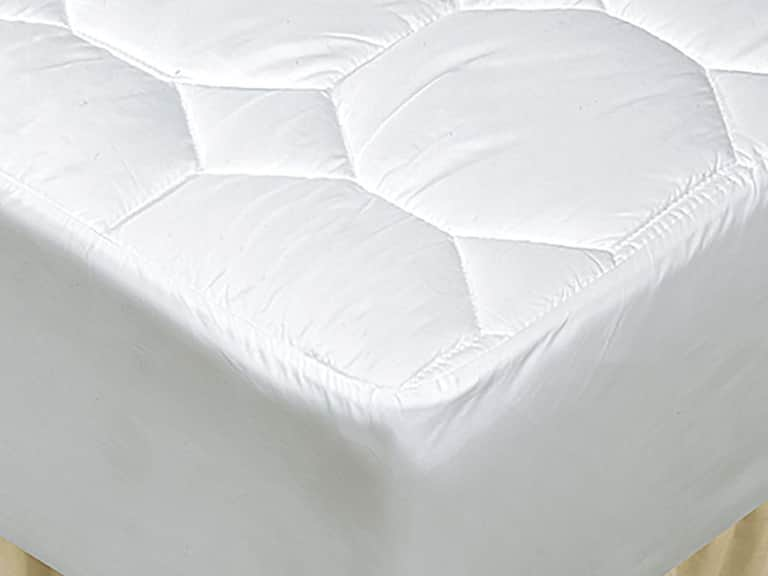
A fitted waterproof crib pad has elastic around its edges or corners and is designed to wrap over the mattress. The elastic helps hold the pad in place, though the actual fit depends on its dimensions, stretch, and the thickness of the mattress. A fitted design is not automatically a better fit: an item that is too large can wrinkle, while one that is too small may pull tight, ride up, or fail to cover the intended surface.
Both styles may have a fabric surface and an internal barrier. The difference lies mainly in their shape and how they attach to the mattress. In either case, the finished layers should lie smooth and secure, without loose or excess material. Follow the pad’s directions and the crib mattress manufacturer’s instructions. Do not improvise a fastening method, fold excess material under the mattress, or combine layers in a way the product instructions do not allow.
A simple comparison
- Flat style: Lies across the mattress; check the specified placement and any directions for securing it.
- Fitted style: Wraps over the mattress with elastic; check mattress depth as well as length and width.
- Both styles: Need to be designed for crib use, used as directed, and kept smooth and correctly positioned beneath the fitted sheet where the instructions call for that arrangement.
Measure the mattress, not just the crib
Product sizing can appear simple until small differences in construction affect the fit. A crib frame may look like the right size, yet the pad is meant to fit the mattress itself. Check the mattress’s stated length, width, and depth, then compare those measurements with the pad’s specifications. A listing that provides only a general label such as “crib size” may not tell the whole story.
Pay particular attention to depth when comparing a fitted style. Two mattresses with the same length and width can have different heights, and elastic skirts are made for a stated depth range. If a pad is designed for a thinner mattress, it may not stretch securely over a thicker one. If it is too deep or generously sized, excess fabric may affect how smoothly it lies. For a flat pad, confirm that its dimensions match the manufacturer’s intended coverage and placement.
Use a tape measure if the mattress label does not give dimensions. Measure the mattress rather than relying on a retailer’s category, and use the product’s current specification rather than an old listing or a measurement taken from a different model. If the mattress maker gives instructions about protectors or other layers, read those as well. A pad should not interfere with the mattress fitting snugly inside the crib.
After placing the pad, check the entire sleeping surface. It should be flat, with no gathered corners, folded edges, or visible slack. If the product cannot sit as intended, stop using that combination and contact the manufacturer for clarification. A secure fit is not merely a matter of neat appearance; it is part of using a crib bedding layer as designed.
Understand the fabric and waterproof barrier
The fabric closest to the sheet can influence how a pad feels and how it handles moisture. Organic cotton flannel, for example, has a soft, brushed surface, while cotton muslin is lighter and more open in texture. A quilted cotton construction may add a little cushioning. These surface details do not, by themselves, indicate whether the pad is waterproof: that function depends on the barrier and how the layers are assembled.
Some pads place a thin membrane between fabric layers. The membrane is intended to keep liquid from passing through while the outer fabric provides the contact surface. Other products use different constructions. Read the manufacturer’s explanation and look for specific information about the barrier, including what it is made from and whether the product is described as waterproof or merely water-resistant. Those terms should not be treated as equivalent: water resistance may reduce penetration under some conditions without promising a complete liquid barrier.
Organic certification claims also require careful reading. A certification may apply to particular fibers or to the product’s manufacturing process, and certification names have defined requirements. Look for the name of the certifying program and a clear statement of what is certified. Avoid assuming that an organic fabric label means every component, including a waterproof membrane, is organic or certified. When a detail matters to your household, check the product label or ask the manufacturer for current documentation.
Likewise, terms such as breathable, hypoallergenic, chemical-free, or non-toxic can be broad. A product description should identify the features that support a claim rather than relying on reassuring language alone. Materials and construction can be compared, but a marketing phrase is not a substitute for product directions or safety guidance.
Layering and safe-sleep considerations
For any crib bedding arrangement, safe sleep takes priority over added softness or convenience. Current guidance from recognized health and safety authorities should be consulted, and families should follow the instructions for their specific crib and mattress. In general, a baby’s sleep surface should be firm, flat, and designed for infant sleep, with a correctly fitted sheet and no loose items in the sleep space. A waterproof layer should never be used to create a softer or padded surface.
When a crib pad is designed to go beneath a fitted sheet, use that arrangement only if the pad’s instructions permit it and the resulting layers remain taut and secure. The sheet should fit the mattress properly after the pad is in place. Do not add extra sheets or pads simply to make cleanup easier, and do not use a product if it shifts, bunches, or changes the way the fitted sheet sits. If the instructions are unclear, seek guidance from the product maker rather than guessing.
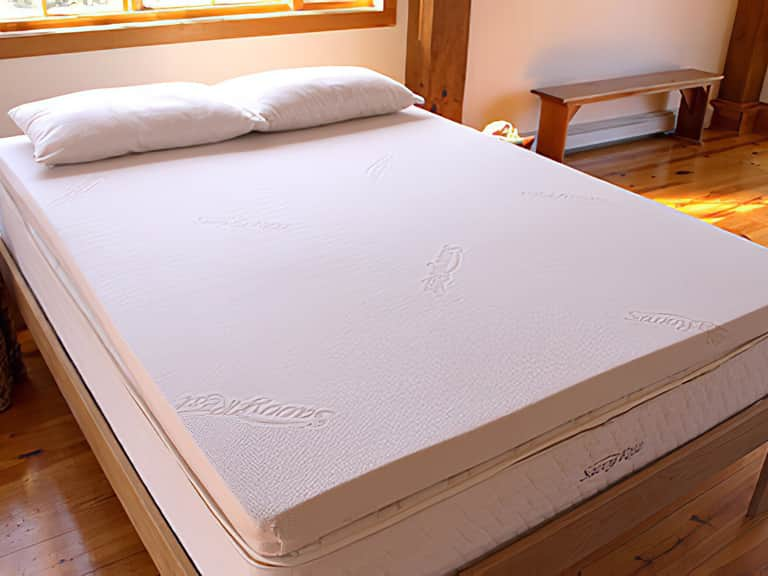
Mattress protectors, pads, and toppers are not necessarily the same thing. A protector or moisture pad is usually intended to shield the mattress; a topper is designed to change its cushioning or feel. A soft or lofty topper is not a substitute for a crib mattress and should not be introduced into an infant sleep space unless it is specifically approved for that use and consistent with current safety recommendations. When in doubt, omit an uncertain layer and consult a pediatric health professional or an appropriate safety authority.
Crib products may also have age, use, or compatibility limits. Read all warnings and instructions, keep packaging and care information for reference, and check for product recalls through relevant official sources. A label or certification does not remove the need to use an item as directed.
Care: protecting the pad’s performance
Washing instructions are part of the product’s design. A waterproof membrane can be affected by heat, harsh detergents, bleach, or repeated drying at high temperatures, depending on its construction. Before the first wash, read the care label and note the recommended water temperature, cycle, detergent, drying method, and any restrictions. Follow the manufacturer’s directions rather than relying on general advice for cotton bedding.
Some organic cotton crib pads are designed for machine washing and drying, but details vary. One product may call for a cold, gentle cycle and low tumble heat; another may specify a different approach. Avoid fabric softener or bleach unless the label expressly permits it. If the care instructions say to wash separately, do so. Overloading a washer can prevent a bulky pad from rinsing properly, while unsuitable heat may damage a barrier or cause shrinkage that changes the fit.
After laundering, inspect the pad before putting it back on the mattress. Look for tears, separated seams, damaged elastic, persistent odors, or a barrier that appears cracked or compromised. Check that it still lies flat and fits the mattress as intended. A pad that has shrunk, stretched, or developed damage may no longer provide the expected protection or fit. Replace it when it cannot be used according to its instructions.
For a spill or leak, remove the bedding promptly and follow the care label. Avoid household treatments that could leave residues or damage the fabric. A mattress that becomes wet should be handled according to the mattress manufacturer’s care instructions; do not cover a damp mattress with clean bedding and assume the moisture has been resolved.
A useful example: two organic cotton constructions
Naturepedic’s organic cotton crib pad descriptions illustrate how products with a similar purpose can differ in shape and layering. One described style is flat, with organic cotton flannel at the surface, organic cotton muslin beneath, and a thin waterproof layer between the fabrics. Another is fitted, using a similar layered construction and elastic around the edges. The listed flat version is described as measuring 28 by 52 inches; the fitted version is also presented for a standard crib mattress of that size.
These details show why a product name alone is not enough. A shopper can compare the style, outer fabrics, barrier description, dimensions, washing directions, and stated exclusions, then check those details against the mattress and product label at hand. Specifications can change, so verify current information directly with the manufacturer before making a decision. The example is not a universal specification for crib pads, nor does it replace safe-sleep guidance.
A practical checklist before choosing
Before selecting a waterproof layer for organic crib bedding, work through the following questions:
- Is it made for a crib mattress? Confirm the intended use, not just the product’s general category.
- What are the actual dimensions? Compare length, width, and, for fitted styles, mattress depth.
- How does it stay in place? Identify whether it is flat or fitted and follow the specified placement and securing instructions.
- What makes it waterproof? Look for a clear description of the barrier and distinguish waterproof from water-resistant claims.
- Which materials are organic? Check whether claims apply to the surface fabric, other layers, or the finished product.
- How should it be washed? Review detergent, temperature, drying, and other care requirements before use.
- Does the complete bedding arrangement remain smooth and secure? The fitted sheet must still fit correctly, with no bunching or excess fabric.
- Do the instructions align with current safe-sleep advice? If anything is unclear or contradictory, pause and ask the manufacturer or consult a trusted safety resource.
Choosing with clarity
A waterproof crib layer is a modest piece of bedding, but its role depends on more than the word “waterproof.” The fabric, barrier, fit, and care directions determine how it works in ordinary use. Flat and fitted styles each have practical considerations; neither should be chosen without checking the mattress measurements and the manufacturer’s instructions.
For families building an organic crib bedding set, transparency is especially valuable. Look for specific material information, understandable certification details, and care guidance that can be followed at home. Then check the assembled sleep surface: the pad and fitted sheet should sit as designed, remain smooth, and preserve the firm, flat mattress surface. When product directions leave room for doubt, verify them rather than improvising. Good protection should make mattress care more manageable without compromising fit, simplicity, or safe-sleep practices.