Bedding · Nursery guides
What to Check When Comparing Nursery Bedding Manufacturers
A crib mattress pad may look like a simple rectangle of fabric. But beneath its quiet surface are decisions about fibers, seams, fit, moisture barriers, laundering, and certification. Comparing manufacturers means looking past broad promises and examining the details that shape how a product is made and used.
Nursery bedding lives in a landscape of repeated washes and small, ordinary messes: a spilled bottle, perspiration, a damp sheet after a change. The products designed for this setting are not interchangeable. A quilted cotton pad, a fitted waterproof pad, and a mattress encasement can all be described as protective bedding, yet they have different constructions and jobs.
That is why manufacturer comparisons are most useful when they begin with specifics rather than adjectives. “Natural,” “breathable,” and “gentle” may sound reassuring, but none tells you exactly which fibers touch the sheet, what lies beneath them, whether liquids are blocked, or how the item should be washed. A clear comparison translates each claim into a checkable detail.
The aim is not to identify one universally best nursery bedding manufacturer. It is to understand what a product is, how it fits the crib mattress, what its label asks you to do, and what a certification does—and does not—verify. That approach makes it easier to compare like with like, including products from Naturepedic and other bedding makers.
Start by identifying the product’s job
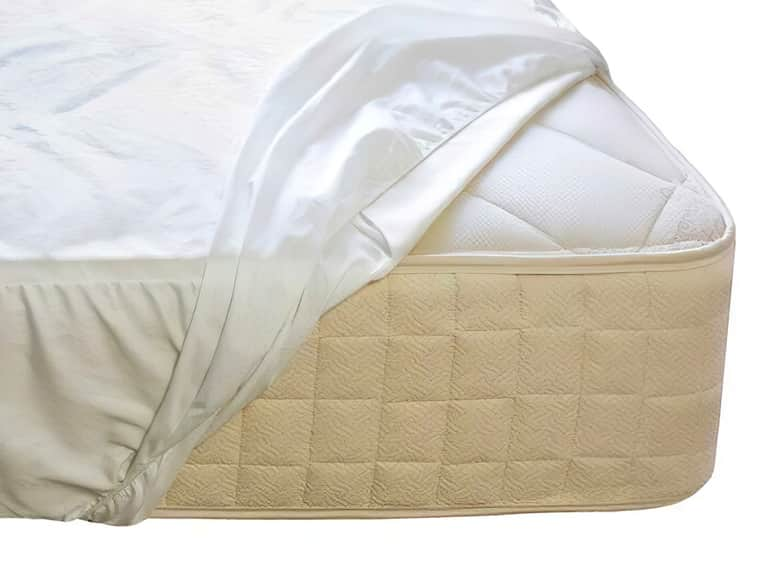
A “crib mattress pad” can refer to more than one kind of layer. Some pads add a modestly quilted, washable surface intended to help shield the mattress from everyday wear. Others include a waterproof membrane intended to limit liquid passing through. A fitted protector or encasement may cover the mattress differently again. Before comparing manufacturers, establish which function matters to your household.
Read the product description and construction details, not only the product name. Ask whether the item is designed to absorb moisture, resist it, or provide a fully waterproof barrier. Check whether it is meant to sit between the mattress and fitted sheet, and whether the manufacturer identifies it as a pad, protector, or encasement. Those terms are not always used consistently across the bedding industry.
This distinction matters especially in a nursery, where extra layers should never be treated as a substitute for following current safe-sleep guidance. The American Academy of Pediatrics advises placing babies on a firm, flat sleep surface with a fitted sheet, without soft objects or loose bedding in the sleep space. Check current guidance from your pediatrician and relevant public-health authorities when setting up an infant’s sleep environment.
Look closely at what the product is made of
Manufacturer descriptions should identify the materials in the main parts of the pad: the top surface, inner fill, backing or membrane, and skirt or elastic. A statement such as “organic cotton” may refer to the fabric, the entire textile product, or only a particular component. The distinction is important. A cotton surface does not, by itself, reveal what forms the waterproof layer underneath it.
When reviewing a label or product page, look for information such as:
- Fiber content: Is the surface cotton, a cotton blend, or another material? Is the fill described separately?
- Layer construction: Does the product have one fabric layer, a quilted fill, or multiple layers with a membrane between them?
- Finishes and exclusions: Does the manufacturer specify whether particular finishes or substances are absent? Treat these as product-specific claims and check their scope.
- Origin details: Does the maker identify where fibers are sourced, where fabric is woven, or where the finished item is assembled?
- Consistency: Do the product page, care label, and certification information describe the same item and materials?
More detail does not automatically mean a product is a better choice for every family. It does, however, make meaningful comparison possible. If one manufacturer names the surface, fill, and waterproof layer while another offers only a broad “natural bedding” claim, the first description gives you more to evaluate.
Understand waterproof construction
A waterproof crib pad usually combines a textile surface with a barrier intended to stop liquid from reaching the mattress. The barrier’s position and material are worth checking. A description that says “waterproof” without explaining the construction leaves important questions unanswered: Is the barrier laminated to a fabric? Is it enclosed between layers? Does the manufacturer describe the surface as washable, and are there limitations on heat or detergent?
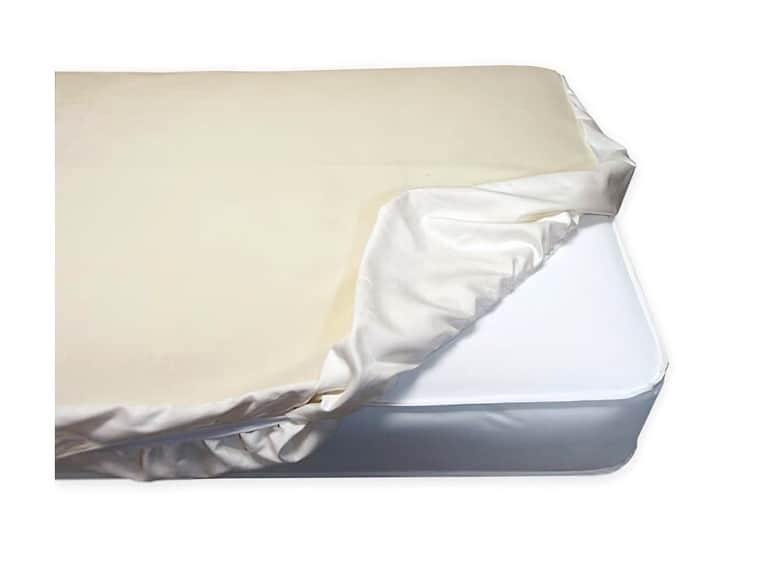
Naturepedic’s waterproof crib-pad descriptions illustrate the value of looking beyond the headline claim. Its fitted waterproof organic cotton crib mattress pad is described with cotton flannel on top, cotton muslin on the bottom, and a thin waterproof inner layer. The listing also identifies elastic around the perimeter, a 28-by-52-inch size, and machine washing and drying. These are concrete comparison points—not a reason to assume every product from the manufacturer has the same construction.
Other makers may use different surface fabrics, membranes, or layer arrangements. Compare the actual specifications for the exact model you are considering. Do not infer that a mattress protector for an adult bed uses the same materials or design as a crib pad, even when the products share a brand name or similar terminology.
Breathability claims also need context. Manufacturers may use the word to describe a fabric or a construction, but it is not a substitute for understanding the product’s materials and purpose. Where a brand provides technical information about a barrier, look for a clear explanation of what is blocked, what may pass through, and which component the claim applies to.
Compare flat and fitted designs
Shape is not a minor detail. A flat pad rests on the mattress and is held in place by the fitted sheet above it. A fitted design has elastic around the edges or a skirt that wraps around the mattress. The best comparison begins with the manufacturer’s intended use and the mattress measurements, not with a general preference for one style.
For a fitted pad, check the full dimensions and the stated depth or pocket measurement, if provided. A product’s length and width matter, but so does whether its elastic construction is intended to accommodate the mattress profile. For a flat pad, verify the dimensions and how the manufacturer says it should be layered. Never assume that a standard crib size will match every mattress simply because the product is labeled “crib.”
Naturepedic offers a useful example of how design can differ within one product category: its listing distinguishes a fitted version from a flat waterproof crib mattress pad. The fitted version describes all-around elastic and measures 28 by 52 inches. The flat version is also described as 28 by 52 inches but has no fitted perimeter. The same nominal footprint, therefore, does not mean the two items install in the same way.
Compare measurements against the mattress maker’s specifications and check that the product is intended for that mattress. For infant sleep, make sure the mattress and fitted sheet are used according to their manufacturers’ instructions and current safe-sleep recommendations. A pad should not cause a sheet to bunch, loosen, or fit improperly.
Treat care instructions as part of the design
A pad that needs frequent laundering is only practical if its care requirements suit the household. Read the label before choosing, particularly when comparing a waterproof product with a quilted cotton pad. Washing temperature, cycle, detergent guidance, drying method, and any restrictions on bleach or fabric softener can affect both convenience and how the manufacturer expects the product to be maintained.
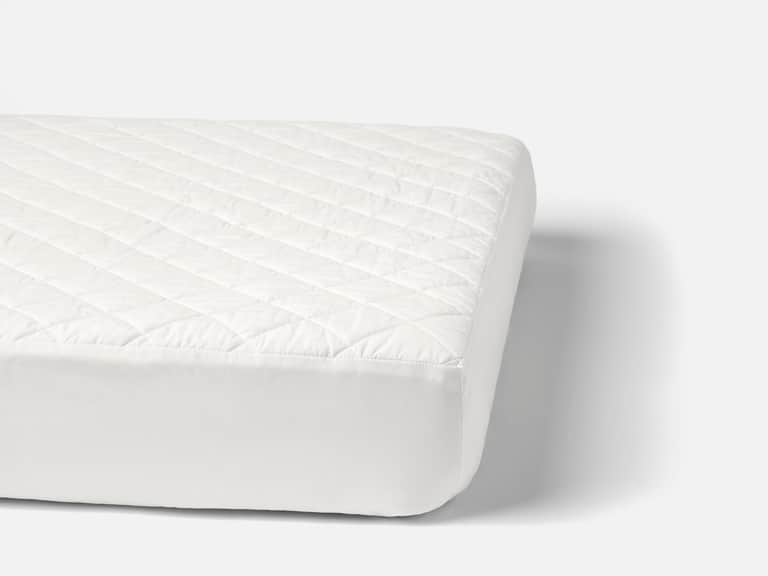
For example, the [Organic Crib Mattress Pad](/products/organic-crib-mattress-pad-3795) is listed as a GOTS-certified, 100% organic cotton pad with a 220 percale covering and two-inch quilted squares. Its care directions call for a cold, gentle wash with like colors and low tumble drying, with prompt removal. The Naturepedic fitted waterproof listing, by comparison, states that it can be machine washed and dried. These descriptions offer a starting point for comparing routines, but the care label supplied with the exact product should always guide use.
Look for clear instructions on whether a pad can be tumble-dried and, if so, at what setting. Heat limits may be especially relevant to a product with a membrane or laminated layer. Avoid assuming that “machine washable” means every cycle, temperature, or drying method is appropriate. Likewise, do not rely on a retailer’s general care summary if the manufacturer’s instructions for the specific model say something different.
It can also help to ask whether washing is likely to affect fit. Some textile products may shrink, and manufacturers may provide pre-washing advice or explain how to handle the item after laundering. A maker that spells out care clearly gives families a more useful picture of the product’s everyday demands.
Read certifications by scope, not by shorthand
Certifications can help consumers assess materials or production claims, but the logo alone is not a full product description. The first question is which certification is named; the next is what it covers. A textile standard may apply to organic fiber production and processing, while a chemical-safety certification may assess a different aspect of a finished product. One does not automatically prove every claim a company makes.
GOTS, the Global Organic Textile Standard, is a widely used textile certification with defined requirements for organic fibers and processing. When a product is described as GOTS certified, verify whether the certification applies to the finished product or to a particular material or operation. The product’s own certification documents or the relevant certifier’s records can provide more precise information than a short marketing statement.
Also distinguish between “made with organic cotton” and “certified organic.” The first is a material claim; the second should be supported by certification information. Check the wording carefully, and be cautious about extending a certification to components that are not identified as covered. A cotton cover, waterproof membrane, thread, elastic, and packaging are not necessarily governed by identical standards.
Certifications are useful evidence, not a replacement for common-sense comparison. They do not tell you whether the pad fits a particular mattress, how it should be washed, or whether its construction suits your needs. Treat them as one part of the record alongside dimensions, fiber content, construction, and care.
Compare a second example without assuming sameness
Not every crib pad is designed to be waterproof. The [Organic Crib Mattress Pad](/products/organic-crib-mattress-pad-3795) provides a contrasting example: it is described as entirely organic cotton, with a quilted construction, a percale covering, and machine-wash care. Its product information says it is intended to sit between the mattress and fitted sheet and help protect against everyday spills, stains, sweat, and skin oils.
That description differs from the Naturepedic fitted waterproof pad in several ways. One emphasizes a quilted cotton construction; the other specifies a waterproof inner layer and fitted elastic. Neither description should be stretched beyond what it states. In particular, a cotton quilted pad should not be presumed waterproof simply because it is marketed as protective, and a waterproof pad should not be presumed to add substantial cushioning.
Brand names can be helpful signposts, but the unit of comparison is the product model. Manufacturers may offer bedding made with different fibers, constructions, sizes, and care requirements. Compare item by item, and use current product documentation rather than relying on assumptions based on a company’s other products.
Check transparency and the limits of claims
A manufacturer’s information is easiest to evaluate when it is specific, consistent, and easy to find. Look for a product description that identifies the material layers, dimensions, intended mattress fit, and care routine. If the item is certified, seek the certification name and the scope of the claim. If the information is missing, a direct question to the manufacturer may help clarify the product before purchase.
Be attentive to words that sound precise but are not explained. “Hypoallergenic,” for example, can be used in different ways; it should not be treated as a guarantee that an individual will have no reaction. “Non-toxic” and “chemical-free” are also broad phrases. All physical materials are made of chemicals, so useful information names a specific material, standard, or substance claim rather than relying on a sweeping slogan.
Similarly, “breathable” does not mean the product has been shown to improve sleep, prevent overheating, or reduce health risks. A manufacturer may describe a fabric’s properties, but readers should distinguish product construction from medical or safety conclusions. For questions about an infant’s sleep environment, consult authoritative health guidance rather than promotional language.
Warranty terms can add another practical layer to comparison. Check the length of coverage, what counts as a defect, and whether the terms exclude damage from unsuitable washing or drying. A warranty is not a promise that a product will last forever; it describes the manufacturer’s stated obligations under specified conditions.
A practical checklist for comparing manufacturers
Before settling on a crib pad or protector, place the product pages side by side and record the same details for each. This makes differences visible and reduces the influence of polished but nonspecific language.
- Product purpose: Is it a quilted pad, a waterproof pad, a fitted protector, or another type of covering?
- Materials: What are the surface, fill, backing, membrane, skirt, and elastic made from?
- Construction: How many layers are described, and where is the waterproof barrier, if there is one?
- Dimensions and fit: What are the finished dimensions, and is the design flat or fitted?
- Mattress compatibility: Does the manufacturer state a suitable size or mattress depth?
- Care: What wash cycle, water temperature, drying method, and restrictions are specified?
- Certification: Which organization certifies the product or material, and what exactly falls within its scope?
- Origin and sourcing: Are sourcing, processing, or manufacturing locations stated clearly?
- Warranty: What is covered, for how long, and under which conditions?
- Claim quality: Are statements supported by product details, or are they broad assurances without explanation?
Make the comparison about evidence
Choosing nursery bedding is a small decision embedded in a much larger routine of caring for a baby. A useful manufacturer comparison does not need dramatic promises. It needs legible facts: fibers identified by component, a clear account of how layers are joined, dimensions that can be checked, instructions that can be followed, and certification claims that state their scope.
Naturepedic’s fitted crib pad shows how a product page can make construction, elastic design, dimensions, and washing guidance visible. A quilted cotton pad offers a different set of details to weigh, including its cover fabric, quilting, and laundering directions. Comparing those descriptions fairly means recognizing their differences rather than treating every “crib mattress pad” as the same product.
In the end, the best comparison is the one that leaves fewer assumptions. Verify the specific model, consult the care label, match dimensions to the mattress, and read certification claims in context. For infant sleep, keep the product decision within current safe-sleep guidance: the pad is only one part of a setup whose central requirements are a firm, flat surface and a properly fitted sheet.